

市场资讯及洞察
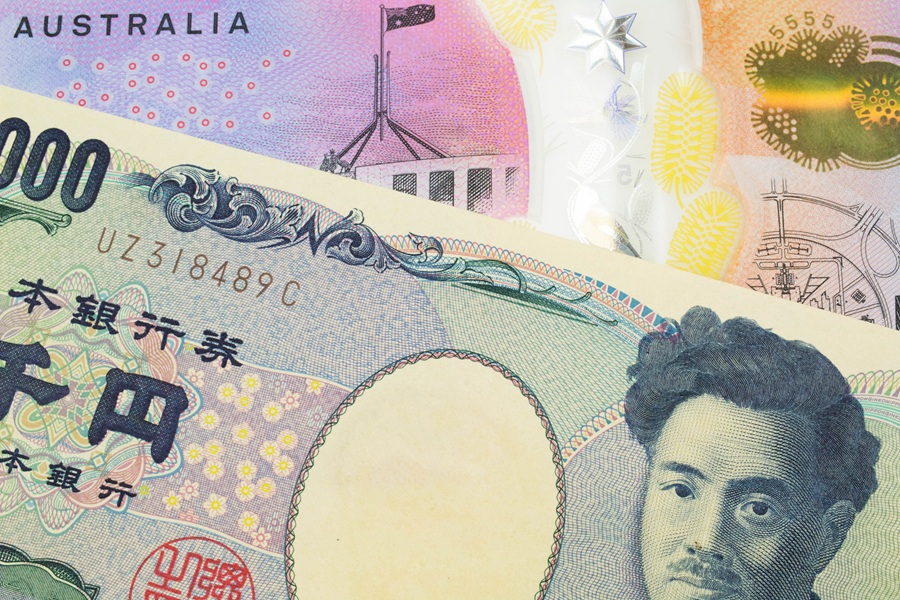
今天下午,澳大利亚储备银行(RBA)做了许多预测家设想的事情,但很少有人相信会真正到来。它将官方现金利率又提高了25个基点(基点),至4.35%。
在东京水对岸,日本银行(BOJ)仍为0.75%,上田行长派出了三名持异议的董事会成员,并要求所有人耐心等待。
这使得悉尼和东京之间的利率差距为360个基点,是本周期中最大的利率差距。而这种差距不仅仅是经济脚注。它是世界上最受欢迎且最容易发生事故的货币市场交易之一:日元套利交易背后的燃料。
这就是故事变得有趣的地方。
快速回顾:什么是套利交易?
套利交易是指投资者在利率非常低的国家借钱,然后将其存放在利率较高的国家。多年来,日元一直是世界上最受欢迎的借贷货币,这主要是因为日本的利率在一代人中一直保持在零附近。
以0.75%借入日元,买入收益率为4.35%的澳元,投资者可能会收取差额。当澳元稳定或上涨时,交易可能看起来非常简单。当情况发生变化时,情况可能会变得非常复杂。
这就是机制,现在... 把它放在图表上。
你可以明白为什么交易者会关注。绿线不断加强。自一月份以来,虚线一直处于平坦状态。那张照片中的故事就是那个粉丝。
但是图表只显示了其中的一半。另一半是为什么这两家中央银行最终进入了如此不同的地方。
两家银行,两个不同的问题
澳洲联储之所以提高利率,并不是因为经济正在蓬勃发展,而是因为汽油已经突破了每升240美分,行长布洛克已经决定进口能源通胀不容忽视。
与此同时,日本央行非常想加息,以捍卫日元兑美元汇率触及160大关。问题在于,它还对打破日经225指数接近6万左右的历史新高持谨慎态度。
因此,日本央行在等待,澳大利亚央行采取行动,澳元/日元成为差距的更清晰表现形式之一。
标题的分歧是一回事。现在提供的套利是事情开始起作用的地方。
六个月内扩大50个基点并不小。它改变了交易在收益率基础上的吸引力。更重要的是,它改变了有多少交易者可能处于同一位置。
拥挤的交易者习惯于保持冷静,直到看上去平静下来。
为什么 CFD 角度很重要
这不只是中央银行布告栏上的宏观故事。它可以直接显示在差价合约交易者屏幕上的价格中,并且可能会同时改变几种常见工具的行为。
从杠杆开始。差价合约(CFD)放大了更大利率差距的双方:缓慢走高,突然下跌。
然后是隔夜融资,这在很大程度上反映了两种货币之间的利率差异。目前缺口为360个基点,澳元/日元的多头头寸可能会带来正的隔夜融资,而空头头寸可能会带来回报。这并不能使多头澳元/日元成为正确的交易。这仅意味着成本状况发生了变化。
分歧也向外辐射。日经225差价合约可以顺应日元疲软的顺风,但如果日元因干预动荡而走强,则可能会受到打击。当套利头寸平仓时,黄金差价合约也可能出现出价。美元/日元在160左右是财政部可能关注的图表,跌破该走势可能会拉高日元兑美元而不仅仅是美元。
这是诚实的总结:利率差距的扩大并不能使差价合约交易者进行交易。它为他们提供了一个机会更大的政权,但陷阱门也是如此。
需要注意的心理陷阱
利率差异的故事在数学上感觉很干净。这些数字可能表明货币应该升值,交易者会大量涌入,而图表却是如此。然后,一个干预标题出现,走势将在20分钟内逆转,止损以最差的可用价格出现。
值得关注的偏见是自满,即由于该交易已经运作了几个月,它将继续运作。这通常是市场变得最不宽容的时候。
交易者的风险问题很简单:如果该货币对在一夜之间朝错误的方向上涨了3%,那么头寸规模还合理吗?如果答案是否定的,那可能比交易观点更能说明规模。
底线
交易者可能希望引起关注的是:反映差异的观察名单、经纪商掉期利率和保证金政策,以及他们准备承受多大的波动率的清晰视图。
尽管套利故事势头强劲,但也有绊脚石,下一步行动可能取决于市场首先注意到哪一个。


US Dollar Index Futures with GO Markets For stock traders, trading indices is a cost-effective way to gain exposure to many different companies in one single transaction. Similarly, the US Dollar Index acts as a benchmark to currency traders. The index measures the value of the US Dollar relative to a basket of foreign currencies.
In other words, the US Dollar index assesses the USD’s global strength in relation to other currencies. Given that USD is the most traded currency, the index is a good representation of the direction of the Dollar. Rather than analysing a single currency pair, the index enables market participants to monitor its movement and hedge their position against a rising or falling Dollar.
Components of US Dollar Index The index consists of 6 foreign currencies which comprises of 24 countries with 19 countries being the members of the European Union. Many countries operate under a floating exchange rate regime and therefore they are highly influenced by the central bank monetary policies such as interest rate decisions, current account balance or other economic and political factors affecting the currencies. Source: GO Markets MT4 Two weeks ago, the index plummeted after the disappointing retail sales data (Actual figures -0.1% and the forecasted figures was 0.2%) but recovered after a few hours following the 25bp interest rate hike.
While the hike was expected, the US Dollar recovered as traders are now anticipating one more hike in the next Fed meeting which will be held on 25-26 July. GO Markets offer a quarterly contract on the Dollar Index (USDOLLAR) and the next rollover will be in September. This market is available with GO Markets on a 1% margin requirement.
The minimum trade size is 0.1 and maximum is 100 contracts. The units of trading for 1 contract size is USD1000*Index Value. There are no overnight interests and swap charges for the USD Index with GO Markets.
By: Deepta Bolaky GO Markets GO Markets may recommend use of software, information, products, or web sites that are owned or operated by other companies (“third-party resources”). We offer or facilitate this recommendation by hyperlinks or other methods to aid your access to the third-party resource. While we endeavor to direct you to helpful, trustworthy resources, we cannot endorse, approve, or guarantee software, information, products, or services provided by or at a third-party resource.
Thus, we are not responsible for the content or accuracy of any third-party resource or for any loss or damage of any sort resulting from the use of, or for any failure of, products or services provided at or from a third-party resource. We recommend these resources on an “as is” basis. When you use a third-party resource, you will be subject to its terms and licenses and no longer be protected by our privacy policy or security practices, which may differ from the third policy or practices or other terms.
You should familiarise yourself with any license or use terms of, and the privacy policy and security practices of, the third-party resource, which will govern your use of that resource.Whilst Go Markets has used reasonable endeavours to ensure that the information provided by Go Markets in the newsletters/reports is accurate and up to date as at the time of issue, it reserves the right to make corrections and does not warrant that it is accurate or complete. News will change with time. Go Markets hereby disclaims all liability to the maximum extent permitted by law in relation to the newsletters/reports and does not give any warranties (including any statutory ones) in relation to the news.
This is a free service and therefore you agree by receiving any newsletter(s)/report(s) that this disclaimer is reasonable. Any copying, redistribution or republicationof Go Markets newsletter(s)/report(s), or the content thereof, for commercial gain is strictly prohibited.
UK Trade vs The World With the UK leaving the European Union next year, its trading arrangements with the bloc will change. How they will change will be determined over the coming months when both parties start the second phase of the negotiations. This will shine a light on what the agreement will look like and how it will impact the world’s fifth largest economy post Brexit.
Since the Brexit referendum in June 2016, the UK has indicated that it wants to strengthen its ties with India, China, Australia and New Zealand. But how does UK trade look against the rest of the world? Positive Trade The UK has a trade surplus with 67 territories around the world, including its closest neighbour Ireland, as well as Switzerland, Australia and the United Arab Emirates.
The UK’s biggest trading partner by far is the United States to whom they exported nearly £100 billion worth of goods and services in 2016. The United States imported just over £66 billion worth of goods and services in 2016 making a trade surplus of just over £33 billion. Source: Office for National Statistics Negative Trade The UK has a trade deficit with the biggest economies of the European Union; including Germany, Spain, the Netherlands and Belgium.
UK’s biggest trade deficit is with Germany – Europe’s largest economy. In 2016, the UK imported £75 billion worth of goods and services from Germany, while exporting just over £49 billion - a trade deficit of around £25 billion. However, being a member of the European trading bloc allows the UK to trade with no restrictions with the 27 other members.
The EU accounted for 48% of goods and services exports from the UK in 2016. While goods and services imports from the EU were worth more than the total from the rest of the world. Source: Google Maps / Office for National Statistics Source: Office for National Statistics
UK Making Post-Brexit Plans 2018 is shaping up to be a defining year for the relationship between the United Kingdom and the European Union. After making sufficient progress in the first phase of negotiations, talks will now begin on the trade arrangements after the UK leaves the EU. Even though the UK cannot agree on any trade arrangements outside of the EU before it leaves the trading bloc, it is already looking for potential trading partnerships around the globe.
One of them is the Trans-Pacific Partnership (TPP). What is the TPP? The TPP (currently changed to Comprehensive and Progressive Agreement for Trans-Pacific Partnership) is a trade agreement between Australia, Brunei, Canada, Chile, Japan, Malaysia, Mexico, New Zealand, Peru, Singapore and Vietnam.
The agreement was originally signed in February 2016, but is currently renegotiated after the United States withdrew from the agreement. The UK joining would effectively help to revive it. The agreement cuts over 18,000 tariffs between the member countries and represents around 40% of the world’s economic output.
The aim of the deal is to develop economic ties between member countries, cut tariffs, and boost economic growth. UK Talks The UK has held informal talks to join the TPP in a bid to start trade agreements after it leaves the EU. The proposal, developed by UK Secretary of State for International Trade Liam Fox, would make the UK the first member of the TPP that does not border the Pacific Ocean. “With these kind of plurilateral relationships, there doesn’t have to be any geographical restriction”, Greg Hands, the UK’s Trade Minister, stated.
A spokeswoman from the Department for International Trade said: “We have set up 14 trade working groups across 21 countries to explore the best ways of progressing our trade and investment relationships across the world. It is early days, but as our trade policy minister has pointed out, we are not excluding future talks on plurilateral relationships.” It is worth pointing out that the combined spending from the 11 TPP nations makes up less than 8% of the UK’s export market, with Japan (the largest economy within the TPP) taking around 1.6% of UK exports, while Germany alone accounts for 11%. However, it is unlikely any deals will be agreed to before the TPP itself has been renegotiated and the UK formally leaves the EU.
We are four months into 2016 and the global economic prospects are still uncertain. The International Monetary Fund (IMF) chief has just issued another warning in recent days, stating that the outlook for global growth is weak and has encouraged policy makers across the world to work together to “bolster confidence, support growth, and guard more effectively against the risk of a derailed recovery”. According to the IMF, lower consumer-led expenditure and governments that are less likely to use fiscal facets to support the economy, coupled with high levels of public debt (which are now the highest since World War 2) are creating a prolonged low-growth environment that can have very serious socio-economic implications.
Most of the developed nations have already embarked on a negative interest rates policy to address the low economic growth. However, as evidenced by this warning, their efforts have not yet been successful and markets and economies are still facing many uncertainties. Euro Area interest rates at various maturities Potential Trading Opportunities Although sluggish growth and negative interest rates are not pleasing for the majority of fund managers and pensioners, certain drivers and trends can potentially create opportunities to the benefit of traders.
Below is an overview of some of these drivers and their follow-on impact on the Japanese Yen, ASX200, gold and the Aussie dollar. Please note that these are our analysis of the market environment. They are not trade recommendations and you should have your own risk management strategy in place when trading the markets. 1) Opportunities and challenges in the banking sector All traders, whether equity or FX, should always keep an eye on the banking sector because stress and pressure in this space can affect every tradeable security across the globe (remember GFC?).
The low growth environment has put banks under downward pressure from various sources. First, it has limited the amount of investment activities which has inherently meant lower revenues for banks which are the traditional providers of investment capital. Second, it has made many banks deal with negative interest rates.
Banks are not yet willing to pass the negative rates to their customers because they want to keep their market share and to discourage people from cashing in their deposits. Therefore, negative rates have caused bank profits to shrink as the difference between interests they receive and the interest they pay has narrowed. Third, the prolonged lower commodity prices resulting from slower demand from China and other emerging economies has pushed a number of mining and energy companies, which have had large debts, to the edge of bankruptcy.
This is obviously bearish for banks as they have been the capital (loans) providers to these companies. Although Australian banks don’t yet have to deal with prospects of negative rates, they have pretty much remained in synch with their overseas counterparts, thanks to the end of the mining boom and lower commodity prices and bankruptcies in the mining and energy sector. For example, ANZ Bank has just announced that they will lose an extra $100 million in mining related bad debts.
Furthermore, Aussie banks are quite vulnerable to the property market here in Australia. Over the years, Australian banks have loaned out billions of dollars to property investors and therefore would have a lot to lose should the property market bubble burst. Major four banks performance From a trading perspective, deterioration in the banking sector can cause a chain of systematic risks which in turn may switch on a number of “risk off” trades.
Using the historical relationship between banks and asset markets, I have calculated that if the current downward trend in global and domestic banks accelerates and markets start to price in an additional weakness in this sector, some trading opportunities may arise in AUDUSD, AUDJPY, ASX 200 and Gold (In AUD). The table below shows how much these assets may move should Australian banks drop by an extra 20% from here: As you can see, ASX 200 index and AUDJPY traders may actually find meaningful medium-term trends should the banking sector start to deteriorate again. AUDJPY has recently enjoyed great buying support from yield-hungry Japanese investors as Australian currency offers a relative attractive yield.
At the moment, the pair has found solid resistance around 86.00 and deterioration in the banking sector can be a catalyst for this resistance to uphold and push the currency pair back to the 78 -79 band. 2) Trading Interest Rates Movements The U.S interest rate set by the Federal Reserve plays a significant role in any short and medium term trading. In response to continued low growth prospects and in the aftermath of the January and February volatilities, the once hawkish Fed which was singling 4 rate rises for this year, has stepped back and is currently signalling a rather softer tone towards rate rises. Just to remind the readers that interest rates are a measure of economic activities.
When policy makers think the economic conditions are getting stronger, they would raise interest rates to control the inflation. When they see economic conditions worsening, they reduce interest rates to stimulate the economy. The graph below (also known as the Dot Plot in the investment community) shows how the Fed governors were thinking about the 2016 economy (in terms of interest rates) both in Dec 2015 and March 2016.
The numbers on the left axis are the projected interest rates and the size of each circle shows the number of governors forecasting a particular rate. As you can see, in Dec 2015, the majority of Fed officials were thinking the rates would go around 1.35% by the end of 2016. However, since then, things have changed and the majority of Fed governors are now thinking we are more likely to be around 0.85% by the end of 2016.
Should the above dots keeps falling to the stage where U.S signals a possible rate cut and more importantly, a move towards negative interest rates, it will have some drastic impact on many tradeable securities. If markets start to price in any chance of U.S rates going negative, the Aussie dollar will lose significant amounts to USD, JPY and gold. The details are in the table below: Though I’m not predicting that the U.S rates will go negative, we are now living in an unchartered territory where everything seems to be possible.
If you talked about the likelihood of negative rates two years ago, most analysts would have laughed you out the door. But here we are today with most of the developed nations interest rates in the negative territory. Therefore, I would closely monitor anything related to the US interest rates.
US-10 year yield since December 2015 3) Trading Opportunities in USD/JPY pair While analysts are scattered around the future direction of the US dollar itself due to Fed’s change of tone, the case of the USDJPY is relatively straightforward. It’s the world’s most traded safe haven currency and trends downwards each time there is another negative surprise or volatility in the markets. In theory, USDJPY should have gone up when the Bank of Japan (BOJ) introduced negative interest rates earlier this year.
However, due to lack of investment opportunities brought by the low growth world and the fact that this pair acts as a barometer for global risk environment, it dropped by some 9.7% since the start of the year and brought short-term traders an abundance of trading opportunities (please refer to our previous article about this point). At the moment, there is nothing that suggests the current economic conditions are going to disappear. It is possible that the existing downward trend USDJPY can in fact continue for as long as the Fed is not taking a serious stance on U.S interest rates.
The biggest risk to the above scenario is a possible BOJ market intervention. The stronger Yen (lower USDJPY) is negative for Japanese economy as it makes their products more expensive abroad. Japan’s economy is highly export driven and higher Yen does not help.
Therefore, at some stage BOJ may decide that enough is enough and start selling Yen in a large scale to push their currency lower. But if history is of any guidance, BOJ’s probable intervention may only create additional shorting opportunity as these interventions have a poor record of effectiveness in changing the currency pair’s downward trends. The opinions and information conveyed in the GO Markets newsletter are the views of the author and are not designed to constitute advice.
Trading Forex and CFD’s is high risk. Ramin Rouzabadi (CFA, CMT) | Trading Analyst Ramin is a broadly skilled investment analyst with over 13 years of domestic and international market experience in equities and derivatives. With his financial analysis (CFA) and market technician (CMT) background, Ramin is adept at identifying market opportunities and is experienced in developing statistically sound investment strategies.
Connect with Ramin: Twitter | LinkedIn
You might have heard about Hong Kong in the news, recently they celebrated twenty years of “return to the motherland”. Before we discuss the HK50 index, it’s let’s briefly review the historical and political situation. You might be asking yourself, is Hong Kong a separate country or part of China? [caption id="attachment_57013" align="alignright" width="450"] Source: https://www.hsi.com.hk/HSI-Net/static/revamp/contents/en/dl_centre/factsheets/FS_HSIe.pdf [/caption] In the strictest sense, Hong Kong is part of China, her official name being Hong Kong Special Administrative Region of the People's Republic of China.
Confusingly, Hong Kong has her own immigration policy, money, stock exchange, postage stamps, flag, etc. This peculiar arrangement is due to the fact that Hong Kong was a British colony from 1841 to 1997. The treaty on “return” stipulated that Hong Kong would continue to operate in a different fashion than most of China, known as “One country, two systems”.
The Hang Seng 50 (HK50 on the GoTrader MT4) has a market capitalization-weighted index of 50 of the largest companies that trade on the Hong Kong Exchange. These companies cover approximately 65% of its total market capitalization. Finance represents almost half of the index.
An additional quarter is weighted in information technology, properties, and telecommunications. As you can see in the weekly view below, HK50 recently broke the 25,000 point mark for the first time in nearly two years. From an all-time high in April 2015, it was last over 25,000 in July 2015.
Continuing a rally from January 2016 which saw the index drop to a five year low. [caption id="attachment_57014" align="alignleft" width="600"] Source: Go Trader MT4 HK50[/caption] Despite the fact that the index’s constituent companies are listed in Hong Kong, 55% of the companies are based in China. A meteoric rise from 5% in 1997, 25% in 2003 and an all-time high of 59% in 2009. HK50 is tied at the hip to the Chinese economy.
How tied is HK50 to mainland Chinese companies you ask? On Tuesday July 4 th shares suffered their worst day in 2017, falling 1.5%, representing the biggest one-day percentage fall since December 15 th. Tencent, one of the ten most valuable companies in the world, headquartered in nearby Shenzhen and making up nearly 11% of the composite.
Tumbled 4% relating to recent negative comments around its popular one-line game products, we should continue to see growth as China's first-quarter GDP growth hit 6.9%, the highest level since the fall. By: Samuel Hertz GO Markets
Trading Forex - USD/CNH The Chinese Yuan (RMB) has doubled its share of global currency trading from 2013 to 2016, advancing from the ninth place to the sixth-most traded currency pair, according to the triennial survey conducted by the Bank for International Settlements last year. This highlights the growing importance of the Chinese Yuan as a global currency. CNH (Chinese offshore yuan) and CNY (Chinese onshore yuan) A crucial difference between the two is that CNY is strictly controlled by the People’s Bank of China and only traded domestically while CNH is allowed to trade outside the mainland – mostly in Hong Kong.
The PBOC set the CNY rate every weekday and it can move within a 2% range during the day. Although the CNH rate is mostly determined by market forces, it tends to stay within close range of the CNY as per the chart below. A Fundamental look – Spot USDCNH U.S. and Chinese Industrial Production Latest figures show that U.S. industrial production was unchanged in February following a 0.1% drop in January, with 0.5% rise of manufacturing output for its sixth consecutive monthly increase.
Meanwhile, Chinese industrial production rose by 0.3% since January following a 0.2% decrease at the beginning of 2017. As coincident indicators of overall economic activity and GDP, these industrial production figures seem to influence positively on CNH more than USD before release of next month numbers. U.S. and Chinese CPI Chinese CPI weakened from 2.5% to 0.8% in March, 1.1% lower than market anticipation while U.S.
CPI declined from 0.6% to 0.1% in the same month and was higher than market forecast. This change of U.S. CPI was in line with the prediction and even 0.1% higher, contributing to achieving target inflation and further revising up U.S. dollars.
A declining CPI may be viewed as a positive on an already inflated Chinese economy. With the lowest three-month implied volatility among emerging market’s currencies, Chinese yuan is stated by Chinese policy makers as “stable” with no surprise now. An increase in M2 money supply despite Chinese restrictions on capital outflows may put more pressure of the CNY.
U.S. and Chinese Trade Balance 7 th March 2017 - $-60B, Chinese trade balance was much lower than forecast ($170B) and broke its long-term trend of trade surplus, levying a heavy burden on the depreciation of Chinese yuan. U.S. actual balance ($-48.5B) was slightly lower than anticipated ($-47B) leaving the USD unchanged. U.S.
Interest Rate Hike As per market expectation, the Federal Reserve voted to raise benchmark lending rate by a quarter percentage point, to a range of 0.75% to 1%, on the early morning of March 16 th (2pm, 15 th March, New York time). An inflation target of 2%, full-employment and stable prices are starting to come together indicating further hikes this year, giving momentum to increased investor confidence about an improving US economy. The Fed statement still projected two more interest-rate hikes this year, offering a strong bullish sentiment for U.S. dollars in the medium to long term.
Source: GO Markets MT4 Platform According to daily USD/CNH graph, it shows a clear-cut primary upward trend composed of increasing peaks and toughs since 2016, despite 3 retracements happened at the beginning of 2016, in July 2016 and at the end of last year. In 2017, a reversal has been pushed back since 2 nd Feb suggesting a consolidation around ¥6.8720. Further upside of USD/CNH looks likely and this uptrend seems likely to continue in the long run.
For short-term speculators, keeping an eye on relevant policies and events as well as doing more detailed technical analysis are both required. The Key Things Worth Nothing for Month Ahead New York Time 10am, 28th March U.S. Conference Board Consumer Confidence 8.30am, 30th March U.S.
First Quarter GDP 8.30am, 4th April U.S. Trade Balance 2pm, 5th April U.S. FOMC meeting 8.30am, 7th April U.S.
Unemployment Rate 10pm, 12th April China Trade Balance, industrial Production and First Quarter GDP 8.30am, 14th April U.S. CPI 23rd April - 7th May First Round of French Presidential Election By Irene Wang, GO Markets For more resource on Forex trading check out our Forex Trading For Beginners introduction, Forex Trading Courses, open a Forex Demo Account or open a live Forex Trading Account.