

市场资讯及洞察
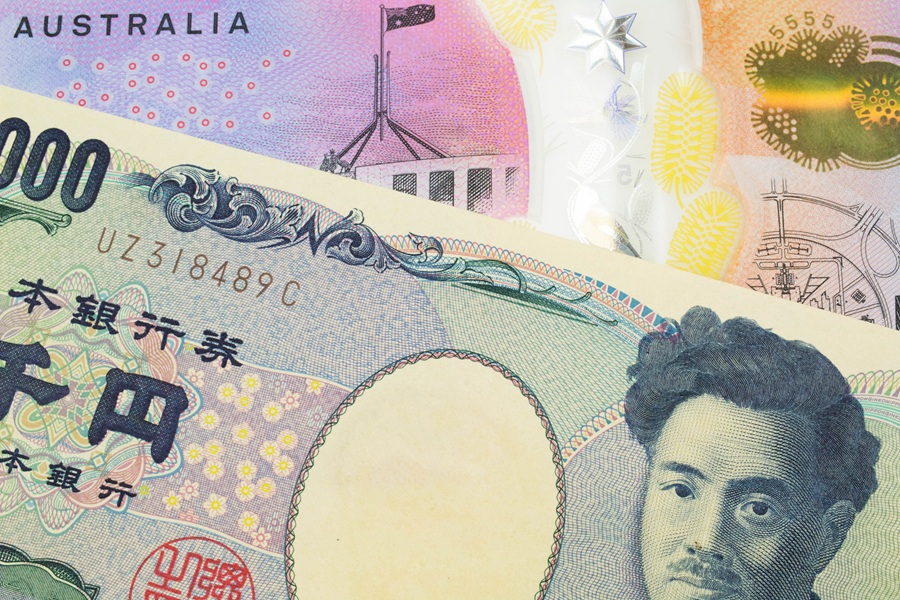
今天下午,澳大利亚储备银行(RBA)做了许多预测家设想的事情,但很少有人相信会真正到来。它将官方现金利率又提高了25个基点(基点),至4.35%。
在东京水对岸,日本银行(BOJ)仍为0.75%,上田行长派出了三名持异议的董事会成员,并要求所有人耐心等待。
这使得悉尼和东京之间的利率差距为360个基点,是本周期中最大的利率差距。而这种差距不仅仅是经济脚注。它是世界上最受欢迎且最容易发生事故的货币市场交易之一:日元套利交易背后的燃料。
这就是故事变得有趣的地方。
快速回顾:什么是套利交易?
套利交易是指投资者在利率非常低的国家借钱,然后将其存放在利率较高的国家。多年来,日元一直是世界上最受欢迎的借贷货币,这主要是因为日本的利率在一代人中一直保持在零附近。
以0.75%借入日元,买入收益率为4.35%的澳元,投资者可能会收取差额。当澳元稳定或上涨时,交易可能看起来非常简单。当情况发生变化时,情况可能会变得非常复杂。
这就是机制,现在... 把它放在图表上。
你可以明白为什么交易者会关注。绿线不断加强。自一月份以来,虚线一直处于平坦状态。那张照片中的故事就是那个粉丝。
但是图表只显示了其中的一半。另一半是为什么这两家中央银行最终进入了如此不同的地方。
两家银行,两个不同的问题
澳洲联储之所以提高利率,并不是因为经济正在蓬勃发展,而是因为汽油已经突破了每升240美分,行长布洛克已经决定进口能源通胀不容忽视。
与此同时,日本央行非常想加息,以捍卫日元兑美元汇率触及160大关。问题在于,它还对打破日经225指数接近6万左右的历史新高持谨慎态度。
因此,日本央行在等待,澳大利亚央行采取行动,澳元/日元成为差距的更清晰表现形式之一。
标题的分歧是一回事。现在提供的套利是事情开始起作用的地方。
六个月内扩大50个基点并不小。它改变了交易在收益率基础上的吸引力。更重要的是,它改变了有多少交易者可能处于同一位置。
拥挤的交易者习惯于保持冷静,直到看上去平静下来。
为什么 CFD 角度很重要
这不只是中央银行布告栏上的宏观故事。它可以直接显示在差价合约交易者屏幕上的价格中,并且可能会同时改变几种常见工具的行为。
从杠杆开始。差价合约(CFD)放大了更大利率差距的双方:缓慢走高,突然下跌。
然后是隔夜融资,这在很大程度上反映了两种货币之间的利率差异。目前缺口为360个基点,澳元/日元的多头头寸可能会带来正的隔夜融资,而空头头寸可能会带来回报。这并不能使多头澳元/日元成为正确的交易。这仅意味着成本状况发生了变化。
分歧也向外辐射。日经225差价合约可以顺应日元疲软的顺风,但如果日元因干预动荡而走强,则可能会受到打击。当套利头寸平仓时,黄金差价合约也可能出现出价。美元/日元在160左右是财政部可能关注的图表,跌破该走势可能会拉高日元兑美元而不仅仅是美元。
这是诚实的总结:利率差距的扩大并不能使差价合约交易者进行交易。它为他们提供了一个机会更大的政权,但陷阱门也是如此。
需要注意的心理陷阱
利率差异的故事在数学上感觉很干净。这些数字可能表明货币应该升值,交易者会大量涌入,而图表却是如此。然后,一个干预标题出现,走势将在20分钟内逆转,止损以最差的可用价格出现。
值得关注的偏见是自满,即由于该交易已经运作了几个月,它将继续运作。这通常是市场变得最不宽容的时候。
交易者的风险问题很简单:如果该货币对在一夜之间朝错误的方向上涨了3%,那么头寸规模还合理吗?如果答案是否定的,那可能比交易观点更能说明规模。
底线
交易者可能希望引起关注的是:反映差异的观察名单、经纪商掉期利率和保证金政策,以及他们准备承受多大的波动率的清晰视图。
尽管套利故事势头强劲,但也有绊脚石,下一步行动可能取决于市场首先注意到哪一个。


In Economics, the difference between 10 Year and 2 Year Bond Yields is one of the leading indicators that help investors to observe any significant changes in the economy. Let's break things down a little further. Firstly, common sense dictates that if you want to make a term deposit in the bank, the rate you can get from the long-term deposit will be more than short term.
Therefore, the spread between long-term and short-term return rate should always be positive, well, in most of the time. However in some historical periods, sometimes the yield spread would be “flatted” (i.e., drop close to zero) or even become negative, in some extreme cases. If that happens, where short-term returns are higher than long-term returns, this is seen as an economic overheat, and a recession is coming.
From the chart below, we can see that the current yield spread is heading towards zero. Since the Fed is guaranteed to have four rate hikes in 2018, and more increases are foreseeable in 2019, the spread is very likely to go negative sooner or later. We'll take a look that the previous cases of the inverted yield curve (i.e., negative yield spread) 1. 2000’s Dotcom Bubble The US Federal Reserve increased its interest rate from 4.75% to 6.5% in a brief time, between Jun 1999 to May 2000, which makes short-term yield soar rapidly and inverted yield curve occurred.
After the NASDAQ bubble burst, the Fed dropped its rates thirteen times in two years, to save its economy. 2. 2008’s Subprime Crisis The same story happened all over again, the Fed first increased its rates 17 times, from 1% to 5.25%. At that time whole world’s economy reached its peak, there is a 6-7% average GDP growth in emerging markets, and even in advanced countries there is a 2.5% growth (which is a lot, compared with today’s growth in the UK) However soon after the crisis triggered, the Fed dropped its rates from 5.25% to 0.00% in only one-year time and kept its zero-rate environment for almost a decade. From the two lessons above, we can observe a similar pattern.
Inverted yield curves consistently occurred near the end of the rate hike cycle, and a substantial economic recession would generally follow. Currently, the US is in the middle of its rate hike cycle, and it seems many of the economic data reveals a sign of overheat. Take the unemployment rate as an example, last month it fell to 3.9%, which is an 18-year low.
The performance of new jobs number is in one of the best periods of growths in recent history. Although previous activity doesn't necessarily predict future outcomes, history suggests once these figures reach their highest possible level, a turning point could be around the corner. There is a saying that lightning never strikes twice, we shall see in this case.
Lanson Chen GO Markets Analyst This article is written by a GO Markets Analyst and is based on their independent analysis. They remain fully responsible for the views expressed as well as any remaining error or omissions. Trading Forex and Derivatives carries a high level of risk.
Sources: TradeEconomics.com
Venezuela: A Latin American Crisis Venezuela’s economy has been in turmoil in recent times with its inflation skyrocketing and with no signs of slowing down, the situation may worsen. The political tensions have also been rising in one of the OPEC (Organization of the Petroleum Exporting Countries) member country whose economy has been slowly declining since the crash of oil prices in 2014. We have seen large protests against the highly unpopular president Nicolas Maduro, who won the most recent in May this year.
However, most people called it a "show election" as it had the lowest voter turnout in Venezuela’s democratic history at 46%. The Economy With the economic and social crisis rising in Venezuela, we have seen the countries inflation rise to new record highs. From reaching 4068% in January, we have seen the inflation reach 46305% last month.
Experts are predicting the number could reach 1,000,000% by the end of 2018, according to the IMF (International Monetary Fund) economist Alejandro Werner and has compared it to Zimbabwe’s hyperinflation in late 2000’s. It is worth pointing out that the second highest inflation in the world is in Sudan at 122%. Shortages in electricity, water, and public transport affect millions of people of Venezuela.
President Maduro blames countries poor economy on an economic war that he says is being led by the United States and Europe. IMF’s Alejandro Werner says that if the country’s economic and social crisis deepens, Venezuela’s economy could decrease by around 50% over the next 5 years which be one of the worst economic falls in over 60 years. "The collapse in economic activity, hyperinflation, and increasing deterioration... will lead to intensifying spillover effects on neighbouring countries," Werner wrote in a blog post. IMF is estimating an 18% decrease in Venezuela’s economy in 2018, up from 15% drop it predicted back in April.
That would be the third double-digit annual decline in a row. Werner said the projections are based on calculations prepared by IMF staff, but he warned that they have a degree of uncertainty greater than in other countries. "An economy throwing you these numbers is very difficult to project," Werner said at a news conference. "Any changes between now and December may include significant changes." The Venezuelan Currency Countries official currency - Bolivar Fuerte (VEF) has weakened dramatically in recent times. 1 US Dollar is currently worth around 206841 bolivars. The Venezuelan government has recently announced it will slash five zeros from its currency.
The announcement was made on 25th July by President Maduro and it is part of a currency reform that was already scheduled for June and was a postponed on two occasions before. The existing Bolivar Fuerte banknotes, which range from 1,000 to 100,000 will stop circulating and will be replaced by the new "bolivar Soberano", which will range from 2 to 500. The new currency is set to start circulating this month.
By Klāvs Valters Sources: Yahoo Finance, Google Maps, Banco Central De Venezuela
GO Markets Pty Ltd updated its Product Disclosure Statement (PDS). View our updated Product Disclosure Statement. The changes made to the PDS mainly relate to adding share CFDs to our offer.
Please read and save a copy of this document for your records.
The fourth quarter kicked off with some good news on trade with a last-minute agreement between US-Mexico- Canada just before the deadline. "America first" is the slogan by Trump and he managed to do just that at least when renaming NAFTA to USMCA. The new agreement came with rules for cars and trucks, labour, IP protections and dairy products. After more than a year of tumultuous negotiations, Trump revamped the nearly 25-year old deal.
Markets participants cheered a “Non-Disaster” scenario but continue to be wary of trade tensions. Investors welcomed the trilateral agreement and eliminated the downside risks of a trade war in this part of the hemisphere. Canada and Mexico are the United States’ two biggest export markets.
The largest exports are the automobiles and auto parts while the largest import with Canada is crude oil and gas. *(Data are goods only) While there are a few tweaks, or changes to the new agreement, the dairy and automobile industry emerged as the two main factors that helped all parties to revamp the trilateral agreement. Dairy Industry The dairy industry appears to be the deal maker even though this sector represents a negligible percentage. Canada is not a significant exporter or importer of dairy products, but its supply management system helps them to control their dairy sector and protect their farmers’ income by limiting imports and setting quotas on domestic production.
The US is facing a severe milk glut, and the US farmers are suffering heavy losses. The new deal gives American farmers greater access to the dairy industry in Canada worth 3.6%. The removal of the controversial Class 7 which is a domestic pricing class that governs milk ingredients such as skim milk powder and milk protein is “a win” for the Americans, Australians and New Zealanders.
They have insisted that this new pricing class has effectively pushed them out of the Canadian dairy markets and this was even challenged at the World Trade Organisation. However, some analysts are sceptical of whether this win on Canada opening up its dairy industry will solve the oversupply of milk in the US. Automobile Industry The agreement will reportedly benefit the car-manufacturing workers in all three countries. 75% of the parts that go into a vehicle is required to be made in North America to qualify for tariff-free, and it also requires 40-45% of a car be made by workers earning at least $16 an hour.
The reaction of the markets The deal brought a relief rally in the markets, but investors are aware that the US-China trade dispute is a much bigger issue. The US has a trade deficit of $71bn with Mexico and $18bn with Canada for goods transactions, and it took more than a year of negotiations for the trilateral agreement to be revised. China has a whopping $375.2bn trade deficit with the US and investors are aware that talks will be challenging.
The Asian markets will probably remain vulnerable to the tit-for-tat trade spat between the US and China. The European markets were able to build up the upbeat momentum on the USMCA as Brexit noises, and Italian risks weighed on markets’ sentiments. Investors are reluctant to put their money in those markets when the US stocks are more attractive given that its fundamentals are stronger.
USDCAD fell sharply to 1.2780 before rebounding and consolidating at the 1.2800 level. A lack of fundamental drivers is restricting the pair to make a firm move in a direction. On the technical side, the RSI remains above the 30 mark which is the oversold conditions which may signal that the pair could drop further down before making any correction.
Is it a “win” for Trump? At first glance, it looks like a victory, but the concessions are mostly similar to the TPP, so it is more good news for Canada. It is argued whether the damage done to the relationship was worth it.
Unlike China, Canada was a good ally to the US. Trade tensions are not over as US-China, US-Japan, US-Europe trade talks are still pending.
US Trade vs the World Since Donald Trump became the President of the United States in 2016, we have heard him say a lot about the "unbelievably bad" trade agreements the world’s largest economy has with some countries around the world. We have already seen Trump attempt to renegotiate the North American Free Trade Agreement (NAFTA), which has reached a deadlock, and there is a possibility of the US scrapping the decades-old agreement between Canada and Mexico. But how does the trade balance look between the US and other nations around the world?
Trade Surplus President Trump has said that "We don't have any good deals. In fact, I'm trying to find a country where we actually have a surplus of trade as opposed to... Everything's a deficit." However, there are many countries which the US has a positive trade balance with.
It’s largest trade surplus is with Hong Kong at $29.7 billion, followed by the Netherlands. The US exports reached nearly $37 billion with Hong Kong in 2017 (from January to November) with $6.9 billion worth of goods imported. However, some analysts are suggesting that Hong Kong’s trade with the US will suffer from the ongoing tensions between the two largest economies in the world.
Trade Deficit Trump has aimed some strong words towards the countries which the US has a negative trade balance with. Most of the criticism has been towards the trading relationship with China – the world’s second largest economy. He may have a point as the trade deficit stands at a whopping $344.4 billion (year-to-date).
Trump said – "With China we have close to a $500 billion trade deficit, so we have to do something. I spoke to the president, I spoke to many people — we're going to work on that very, very hard. And we're going to do things that are the proper things to do." The second largest trade deficit is with one of Americas two closest neighbours – Mexico.
Donald Trump has slated the NAFTA agreement in particular, which he has called a disaster for US manufacturing. However, since Trump was elected we have seen some big American companies move their production back to the US. Most recently Fiat Chrysler, the world’s eighth largest auto maker announced its plans to move production of its Ram heavy pickup trucks from Mexico to Michigan.
Moving production of the Ram, which is mainly sold in the US and Canada, means that Fiat Chrysler will not be paying the high import duties which are likely to apply if the NAFTA agreement is rolled back. Overall, we can see why Trump has been criticising the trading agreements with some countries around the world. But will he be able to change it during his presidency?
His current actions would suggest that the United States’ trade policies will be changing.
US Indices at Record Highs US Indices have hit record highs in 2017 and are continuing to rally since the Trump presidency began back in January. The recent rally in the US Indices is mainly due to big number of companies reporting stronger performance results than the experts were predicting and a weaker dollar. Now let’s look at how the main US Indices have been performing in 2017.
Dow Jones Industrial Average About the Dow The Dow Jones Industrial Average (The Dow, WS30 on the Go Markets MetaTrader FX trading platform ) is a price weighted measure of 30 US blue chip companies. This Index covers all industries apart from utilities and transportation. [caption id="attachment_57659" align="aligncenter" width="532"] Source: http://us.spindices.com[/caption] The Dow in 2017 On 25 th January 2017, Dow Jones reached the landmark 20,000 barrier for the first time ever as Trumps pro-growth policies boosted the financial markets. It took under a month for the Index to close at 20,500-mark for the first time ever.
Then on 1 st March, the Dow reached the 21,000-mark for the first time and the rally continued. Just over 5 months later, on 2 nd August, the Dow reached the 22,000-mark for the first time ever after Apple posted quarterly results that beat the expectations. WS30 [caption id="attachment_57655" align="aligncenter" width="600"] Source: Go Markets MT4[/caption] S&P 500 About S&P 500 The Standard & Poor’s 500 (S&P 500, US500 on the Go Markets MetaTrader 4 platform ) is an American stock market index, generally viewed as the best single gauge of large-cap US equities.
There is over $7.8 trillion USD benchmarked to the index, with index assets comprising around $2.2 trillion USD of this total. The Index includes 500 top companies and captures approximately 80% coverage of the available market capitalization. [caption id="attachment_57660" align="aligncenter" width="546"] Source: http://us.spindices.com[/caption] [caption id="attachment_57656" align="aligncenter" width="600"] Source: http://us.spindices.com[/caption] [caption id="attachment_57657" align="aligncenter" width="600"] Source: http://us.spindices.com[/caption] S&P 500 in 2017 The Index first reached the 2,300-mark on 26 th January before falling below the level at closing. It took two weeks before the S&P 500 finally closed above 2,300.
The S&P first crossed 2,400 on 1 st March before again falling below that level at closing. The Index finally closed at above 2,400 on 15 th May. As you can see in the chart below, the S&P 500 has been climbing consistently in 2017 and the Index broke the 2,450-mark on 19 th June and it is predicted that it will reach new highs by the end of the year.
US500 [caption id="attachment_57658" align="aligncenter" width="600"] Source: Go Markets MT4[/caption] By: Klavs Valters GO Markets