GO Markets,让交易更进一步
智慧交易,从选择值得信赖的全球券商开始。低点差、快速成交、零入金手续费、功能强大的交易平台,以及屡获殊荣的客户支持,让您的交易更进一步
二十年稳健实力,成就值得信赖。
二十年专注打造极致交易体验。
自2006年起,致力缔造卓越的交易环境。


全球交易者共同的选择
自 2006 年起,GO Markets 已帮助全球数十万交易者实现他们的投资目标。凭借严格监管、以客户为本的服务,以及屡获殊荣的教育资源,我们始终是交易者值得信赖的合作伙伴。
*Trustpilot reviews are provided for the GO Markets group of companies and not exclusively for GO Markets Ltd.






























*Awards were awarded to GO Markets group of companies and not exclusively to GO Markets Ltd.


GO Markets
让交易更进一步
探索上千种交易机会,享受专业机构水准的交易工具、流畅稳定的交易体验,以及屡获殊荣的客户支持。开户流程简单快捷,让您轻松开启交易之旅。

Every time markets get jumpy, a three-letter acronym starts showing up in headlines and trading rooms. The VIX. You will see it called the fear gauge, the fear index, or just "vol." For newer traders, it can feel like an insider's number that everyone seems to track but few stop to explain.
Here is the part many new traders miss. The VIX is not a prediction of where the market will go. It is a reading of how much movement the market expects in the near future. That distinction sounds small. It changes how the number should be used.
This Playbook breaks the VIX down for beginner to light-intermediate traders. Part 1 explains what it is and how it works. Part 2 turns that understanding into a practical, scenario-based process you can use to prepare, observe, and manage risk.

Before you look for a setup
Understand how this market actually behaves first. Use this guide as a starting point, then practise the concepts on charts, watchlists, and demo tools before applying them in live conditions.
The 101 explainer
Build a clear, foundational understanding before you do anything else.
What is the VIX, in plain English
The VIX is the Cboe Volatility Index. It is a real-time index designed to measure the expected volatility of the S&P 500 over the next 30 days. It is calculated from the prices of S&P 500 index options.
Here is a simpler way to picture it. Imagine the options market is a giant insurance market for stocks. When traders are worried, they pay more for protection. When they are calm, that protection gets cheaper. The VIX takes those insurance prices and turns them into a single number.
- The VIX is not a measure of what has happened. It is a measure of what option markets expect to happen, in terms of magnitude, not direction.
- The VIX does not tell you whether the S&P 500 will go up or down. It tells you how much movement is being priced in.
- The VIX is not directly tradable as a stock. Traders gain exposure through related products such as VIX futures, VIX options, and volatility-linked exchange-traded products.
Why the VIX matters to new traders
Even if you never plan to trade volatility directly, the VIX still matters. It is one of the cleanest reads on market sentiment available, and it tends to move in ways that reflect risk appetite across global markets.
When the VIX rises sharply, it often coincides with falls in equity indices, wider spreads in many CFD markets, and a flight to perceived safer assets such as the US dollar, gold, or government bonds. When the VIX is low and stable, conditions often favour trending behaviour and tighter spreads.
For CFD traders, this matters because leverage can magnify both gains and losses. Volatility is the engine behind both. A market that moves more in a day can offer more opportunity, but it also raises the risk of fast adverse moves, gaps around news, and stop-outs in thin liquidity.
The key terms to know
You do not need to memorise every piece of options jargon to use the VIX. These are the terms that come up most often.
The market's expectation of how much an asset will move in the future, derived from option prices. The VIX is built from implied volatility.
How much the market actually moved over a past period. Useful for comparing expectations against reality.
The benchmark index of around 500 large US companies. The VIX is calculated from options on this index.
The tendency of a series to return to its long-term average over time. The VIX is widely described as mean-reverting.
The normal shape of the VIX futures curve, where longer-dated contracts trade higher than the spot VIX. Why it matters: cost can eat into returns over time.
When longer-dated VIX futures trade below spot. Often short and accompanies fast-moving markets where fear is concentrated now.
Shorthand for periods when investors are willing to take more risk, or pull back from riskier assets. VIX rises during risk-off.
The difference between the bid and ask price. Spreads on many CFD markets can widen during high-volatility events.
How easily an asset can be bought or sold without affecting its price. Liquidity tends to thin out around major news, which can amplify moves.
How it works in real market conditions
The VIX is not pulled out of a single price. It is calculated continuously throughout the US trading session from a wide range of S&P 500 index option prices, weighted by how close they are to current levels and how far out their expiries are.
The VIX tends to move inversely to the S&P 500 most of the time. When equities fall, demand for downside protection often rises, which pushes implied volatility higher. The relationship is not mechanical. There are days when both rise or fall together.
The VIX also tends to spike harder than it falls. Volatility can rise quickly when stress hits the system, then ease more gradually as conditions normalise. Up the elevator, down the escalator.
VIX and the S&P 500 typically move in opposite directions
Stylised illustration of the inverse relationship over a 12-month window
Most of the time, the VIX sits below 20
Approximate share of daily closes by VIX range, indicative long-run distribution
Use GO Markets charts, alerts and watchlists to monitor how the K-shaped consumer theme connects with the VIX.

The “resilient consumer” line being recycled across earnings calls is doing a lot of work. Index-level data helps it along. Headline retail sales hold. Spending looks firm. Stop reading there and the story looks simple.
But it is not.
Underneath sits a split-screen economy, the K-shape, where one consumer is carried by asset wealth, US large-cap exposure and the AI rally, while another is stuck with the less glamorous arithmetic of petrol, credit card minimums and a car loan that gets harder to service with each statement.
For CFD traders, the average is the problem. What matters is which side of the K a stock, sector or currency pair is exposed to, because that is where margins, earnings guidance, single-stock CFDs, index performance, commodities and FX may start telling a more divided story.
The big "K"
The "K" is just a chart shape. One arm angles up. The other angles down. Apply that shape to households and you get a workable model of who is benefiting from the current cycle, and who is being squeezed by it.
The upper arm, where asset wealth is doing the heavy liftingCONTINUE READING
The upper arm is asset-rich. These households own homes, hold the bulk of equity exposure and have benefited from the AI-linked rally in US large-cap equities. Net worth has been rising faster than inflation, which means their spending may be less price-sensitive and less reliant on borrowing. Roughly 87 per cent of all US equities sit with the top 10 per cent of households and that concentration matters when markets rally, because the wealth effect lands in fewer pockets than people assume.
Rate cuts may give some relief
Stress could weaken broader spending
The lower arm tells a different story. With official US inflation still around 3.7 per cent, lower-income earners are spending more on essentials and falling back on credit. Auto loan delinquencies have climbed to their highest level since 2010.
That is not a recession signal on its own. It is a strain signal. And because strain rarely stays neatly contained, it can start to show up in the spending mix before it shows up in the headline data.
The clue markets cannot ignoreThe punchline is this: the top 20 per cent of US earners now account for more than 60 per cent of total retail spend. Once you internalise that, a lot of consumer-stock charts start to make more sense.
Manage your catalysts
Prepare for upcoming events and review your approach before trading.
We have been here before
Same K-shape, faster upper arm
The split is not new, after all markets have seen versions of this before, because every few cycles, the same uncomfortable pattern comes back into view: one part of the consumer economy keeps moving, while another starts to drag.
Continue reading
Same K-shape,
faster upper arm
The K-shape is not new. What is different in 2026 is the speed and concentration of the upper arm. AI-linked equity wealth has supercharged the asset-rich consumer faster than in any earlier dispersion cycles.
First sustained dispersion
Top 5 per cent income growth ran 4.1 per cent a year. Equity ownership began to concentrate significantly, marking the first modern iteration of the split.
Highly concentrated recovery
Around 95 per cent of recovery gains went to the top 1 per cent. The bottom 80 per cent of wealth holders lost 39 per cent. Stocks rebounded aggressively while housing remained stagnant.
The Stimulus Buffer
Stimulus briefly narrowed the K-shape. However, the subsequent equity surge saw the top 10 per cent capture roughly 90 per cent of all corporate equity gains.
Accelerated Verticality
The top 10 per cent now drives about 49 per cent of total consumer spending—the highest share since 1989. AI-linked equities have structurally accelerated the upper arm at record speed.
Why the K-shape matters for CFDs
Aggregate data, such as headline retail sales, total consumer credit and broad index moves, averages everyone together. In a single-consumer economy, that average is useful but in a K-shaped economy, the average can mislead. What matters is which side of the K a company sits on and whether the price reflects that.
Continue reading
That changes the way three things behave.
1. Dispersion: Two stocks in the same sector can post very different earnings depending on who their customer is. An index move can mask that. A single-stock CFD does not. A luxury retailer and a value retailer may both sit inside the consumer universe, but they are not trading the same household balance sheet. A premium travel name and a budget operator may both report on travel demand, but the customer mix can make the earnings story very different.
For traders, the sector label is only the first layer. The customer base is the second.
2. Margin pressure: Companies serving the lower arm may be increasingly forced to discount. PepsiCo, for example, has cut prices on certain snack lines by around 15 per cent. Margin compression at the bottom often does not show up in headline beats. It can show up later in guidance.
That is where CFD traders need to be careful with the first read. A company can beat revenue expectations and still guide cautiously if it had to protect volume with promotions, price cuts or weaker margins.
3. Credit signals: Big banks publish their own K-shaped commentary every quarter. JPMorgan’s recent quarterly update flagged that higher-income borrowers are holding up while lower-income cohorts are showing more strain in credit card charge-offs. JPMorgan reported managed revenue of US$50.5 billion in its most recent quarter. The headline is one thing. The K-shaped colour commentary inside the release is another.
That kind of language has, in past cycles, preceded a wider repricing of consumer-facing names. It does not guarantee one this time.
CFD sector examples
One way to analyse the K-consumer theme is to compare companies in pairs rather than looking only at single names. This is not about deciding which stock is good or bad. It is an illustrative way to compare how different customer bases may influence market commentary and price behaviour.
Source attribution and disclaimer: Data and examples are drawn from S&P Global Market Intelligence, Federal Reserve Distributional Financial Accounts, ASX company announcements, RBA household credit data, PepsiCo’s February 2026 strategic update and Wesfarmers’ 2026 half-year results. Companies are categorised by their primary revenue-generating demographic based on recent annual reporting. The “CFD Trader’s Watchlist” is provided for general information and educational commentary only. Company names are used to illustrate the “K-shaped consumer” theme and are not financial advice, a recommendation, or a solicitation to buy, sell or hold any security, CFD, derivative or other financial product.
How the split reaches APAC screens
For Australian CFD traders, the K-consumer theme can reach local screens through three channels the US names alone do not capture:
The APAC tab in the watchlist maps the K onto Australian consumer names. Wesfarmers does most of the heavy lifting, because Kmart and Bunnings sit on opposite arms of the same business. Endeavour and Coles play discretionary against defensive in staples. Flight Centre and Webjet do the same in travel. Macquarie and Latitude split the credit story.
The upper arm is not only a US story. LVMH, Hermès and Richemont sit downstream of the high-end Chinese consumer. A softer luxury read in Asia can move broader risk appetite, mining sentiment and AUD/USD before it shows up in US data, which is why luxury can be an early signal.
A stretched US lower arm may push the Federal Reserve toward a more dovish stance. That could pressure the US dollar and support AUD/USD, depending on commodity sentiment and the RBA. The K-consumer story is not always a retail story. Sometimes it shows up in FX first.
How the theme could play out
Bank charge-off rates and discretionary retailer guidance start to confirm or unwind the dispersion narrative.
AI-linked equity gains keep feeding the wealth effect at the top end.
The next consumer credit report shows further deterioration in lower-income cohorts.
Fed commentary on financial conditions, US consumer credit prints, bank earnings language and ASX consumer names.
The K persists into mid-year, with broad indices continuing to mask it.
Rate cuts begin lifting both arms unevenly, with rate-sensitive, lower-income households getting some relief.
A sustained Brent move above US$120 pressures mid-tier discretionary spend and forces earnings downgrades.
Fed dot plot revisions, oil supply shocks, retailer guidance, China luxury demand, AUD/USD and mining sentiment.
Scenario disclaimer: The “Next 30 days” and “Next 3 months” scenarios are illustrative “what-if” models for stress-testing a market thesis and identifying potential catalysts. They are not a house view, forecast, guarantee, or prediction of future market movement. Any Brent price targets, Fed policy references, or other market benchmarks are hypothetical only.
Continue Reading
Where the framework could break
If the AI rally rolls over, upper-arm spending could weaken faster than the data has suggested.
Luxury demand can weaken if China's high-end consumer slows.
If energy prices fall rather than spike, the lower-arm squeeze eases and the dispersion trade unwinds.
AUD/USD can move against expectations if commodity prices fall or the RBA deviates from global policy paths.
By the time a theme is widely discussed, much of the move may already be priced into the instruments.
CFDs are leveraged. Wider dispersion can mean larger gap risk around earnings and tighter conditions for stop placement.
General information only. Scenarios are illustrative. Real-world conditions are subject to volatility and unforeseen shifts.
The bottom line
The K is not a forecast. It is a lens. It forces the question headline data ignores: whose consumer am I actually trading?
For CFD traders, answering that can be the difference between an index move and a single-stock CFD that tells the opposite story.
The next test is threefold:
- Earnings: Does upper-arm demand hold as luxury and tech reports land?
- Energy: Does Brent stay contained below US$90, or does a spike further squeeze the lower-arm budget?
- Credit: Does bank commentary continue to flag the income split JPMorgan called out this quarter?
The work is not to predict the break. It is to decide your response before it happens. By the time the headline lands, the price, and the opportunity, may have already moved.
Next week: Tesla, AI infrastructure and how the same dispersion logic plays out one layer up the stack.
Make your next move count
Stay sharp with watchlists, charts and alerts as conditions change.

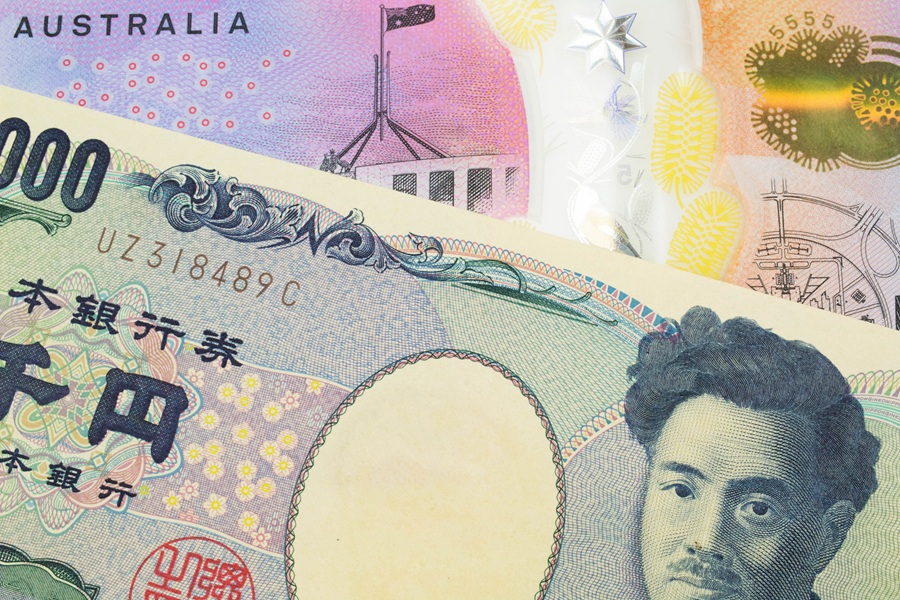
今天下午,澳大利亚储备银行(RBA)做了许多预测家设想的事情,但很少有人相信会真正到来。它将官方现金利率又提高了25个基点(基点),至4.35%。
在东京水对岸,日本银行(BOJ)仍为0.75%,上田行长派出了三名持异议的董事会成员,并要求所有人耐心等待。
这使得悉尼和东京之间的利率差距为360个基点,是本周期中最大的利率差距。而这种差距不仅仅是经济脚注。它是世界上最受欢迎且最容易发生事故的货币市场交易之一:日元套利交易背后的燃料。
这就是故事变得有趣的地方。
快速回顾:什么是套利交易?
套利交易是指投资者在利率非常低的国家借钱,然后将其存放在利率较高的国家。多年来,日元一直是世界上最受欢迎的借贷货币,这主要是因为日本的利率在一代人中一直保持在零附近。
以0.75%借入日元,买入收益率为4.35%的澳元,投资者可能会收取差额。当澳元稳定或上涨时,交易可能看起来非常简单。当情况发生变化时,情况可能会变得非常复杂。
这就是机制,现在... 把它放在图表上。
你可以明白为什么交易者会关注。绿线不断加强。自一月份以来,虚线一直处于平坦状态。那张照片中的故事就是那个粉丝。
但是图表只显示了其中的一半。另一半是为什么这两家中央银行最终进入了如此不同的地方。
两家银行,两个不同的问题
澳洲联储之所以提高利率,并不是因为经济正在蓬勃发展,而是因为汽油已经突破了每升240美分,行长布洛克已经决定进口能源通胀不容忽视。
与此同时,日本央行非常想加息,以捍卫日元兑美元汇率触及160大关。问题在于,它还对打破日经225指数接近6万左右的历史新高持谨慎态度。
因此,日本央行在等待,澳大利亚央行采取行动,澳元/日元成为差距的更清晰表现形式之一。
标题的分歧是一回事。现在提供的套利是事情开始起作用的地方。
六个月内扩大50个基点并不小。它改变了交易在收益率基础上的吸引力。更重要的是,它改变了有多少交易者可能处于同一位置。
拥挤的交易者习惯于保持冷静,直到看上去平静下来。
为什么 CFD 角度很重要
这不只是中央银行布告栏上的宏观故事。它可以直接显示在差价合约交易者屏幕上的价格中,并且可能会同时改变几种常见工具的行为。
从杠杆开始。差价合约(CFD)放大了更大利率差距的双方:缓慢走高,突然下跌。
然后是隔夜融资,这在很大程度上反映了两种货币之间的利率差异。目前缺口为360个基点,澳元/日元的多头头寸可能会带来正的隔夜融资,而空头头寸可能会带来回报。这并不能使多头澳元/日元成为正确的交易。这仅意味着成本状况发生了变化。
分歧也向外辐射。日经225差价合约可以顺应日元疲软的顺风,但如果日元因干预动荡而走强,则可能会受到打击。当套利头寸平仓时,黄金差价合约也可能出现出价。美元/日元在160左右是财政部可能关注的图表,跌破该走势可能会拉高日元兑美元而不仅仅是美元。
这是诚实的总结:利率差距的扩大并不能使差价合约交易者进行交易。它为他们提供了一个机会更大的政权,但陷阱门也是如此。
Manage your catalysts
Prepare for upcoming events and review your approach before trading.
Scenarios for the days ahead
The Base Case
The immediate base case is fairly tame. AUD/JPY could drift higher as traders price the wider gap and the Australian dollar finds support from today’s hike. An upside acceleration could come from softer yen positioning and steady risk appetite.
However, tame does not mean safe. A rate check by Japan’s Ministry of Finance, often the warning shot before actual currency intervention, could trigger a sharp yen rally and force carry positions to unwind.
- USD/JPY behaviour around 160
- MoF intervention commentary
- Australian petrol prices
Heading into 16 June: Double Decision Day
The headline event is 16 June, when the RBA and BOJ deliver decisions on the same day. While the most likely outcome is a “no surprise” hold from both, markets rarely wait politely.
An upside scenario for AUD/JPY would be a hot Australian inflation print on 27 May that supports a hawkish RBA posture. Conversely, any shift in BOJ language towards earlier normalisation could compress the spread quickly. Margin settings can also vary around major events, making the calendar a key influence on trade behaviour.
A hot Australian inflation print on 27 May supports a hawkish RBA posture.
A shift in BOJ language towards earlier normalisation narrows the spread.
The August Outlook
By August, the picture may look different. If oil cools and Australian inflation softens, the 4.35 per cent rate may turn out to be the cycle peak. The base case from there is a slow narrowing of the gap as the BOJ inches higher.
The uglier path is a global growth scare that lifts the yen as a safe haven, forcing positions to unwind regardless of interest rate maths. This is the uncomfortable truth: the maths can look tidy, but the exits can get messy.
需要注意的心理陷阱
利率差异的故事在数学上感觉很干净。这些数字可能表明货币应该升值,交易者会大量涌入,而图表却是如此。然后,一个干预标题出现,走势将在20分钟内逆转,止损以最差的可用价格出现。
值得关注的偏见是自满,即由于该交易已经运作了几个月,它将继续运作。这通常是市场变得最不宽容的时候。
交易者的风险问题很简单:如果该货币对在一夜之间朝错误的方向上涨了3%,那么头寸规模还合理吗?如果答案是否定的,那可能比交易观点更能说明规模。
底线
交易者可能希望引起关注的是:反映差异的观察名单、经纪商掉期利率和保证金政策,以及他们准备承受多大的波动率的清晰视图。
尽管套利故事势头强劲,但也有绊脚石,下一步行动可能取决于市场首先注意到哪一个。
Watching Asia-Pacific moves today?
Track Asia-Pacific themes and monitor moves as they unfold with our institutional-grade tools.
Lorem ipsum dolor sit amet, consectetur adipiscing elit. Suspendisse varius enim in eros elementum tristique. Duis cursus, mi quis viverra ornare, eros dolor interdum nulla, ut commodo diam libero vitae erat. Aenean faucibus nibh et justo cursus id rutrum lorem imperdiet. Nunc ut sem vitae risus tristique posuere.